
The Ultimate One Week Itinerary for Malta: A Complete Travel Guide
Planning a trip to Malta? This one-week itinerary is designed to help you experience the best of this tiny Mediterranean island, from its historic streets and UNESCO World Heritage Sites to crystal-clear lagoons and gorgeous beaches. Whether you’re a history buff eager to explore the Knights of St. John, megalithic temples, and ancient forts, or a nature lover looking to swim in the Blue Lagoon or relax at St. Peter’s Pool, this guide covers the entire island in a manageable week. You’ll get tips on where to stay in Valletta, Gżira, Sliema, and St. Julian’s, how to get around by rental car or public buses, and the best times and ways to explore Malta’s hidden gems and scenic coastal spots.
This comprehensive Malta itinerary includes the best things to do, the best time to visit, how to get around, where to stay, where to eat vegan and practical tips for your first time on the island of Malta.
Best Time to Visit Malta
The best time to visit Malta is:
April–June
Warm but comfortable temperatures, fewer crowds, and ideal weather for sightseeing and boat trips.
September–October
The sea is still warm from summer, but prices and crowds drop. It’s a great way to enjoy gorgeous beaches without peak-season chaos.
July and August are popular for beautiful beaches and nightlife, but expect intense heat — especially when exploring open-air historical sites like the megalithic temples, which are older than the Egyptian pyramids.
February: We went for my birthday and found it a great time to visit, as accommodation prices were more affordable due to the low season, and the weather was pretty good. It was very windy, which, unfortunately, prevented us from going to Gozo or taking the ferry. For the most part, the weather was excellent and allowed us to explore Malta on foot.
How to Get to Malta
Malta is well-connected with many direct flights from major European cities. You’ll arrive on the main island at Malta International Airport, just a short distance from Valletta, the capital city.
How to Get Around Malta
Because of Malta’s small size, distances are short — but choosing the best way to travel depends on your style.
Public Transportation
Malta’s public buses connect most major towns and attractions. Bus stops are frequent, and routes are easy to check on Google Maps. Public transportation is affordable, though it can get crowded in summer. When we went to Malta, we bought a card for 19€ that was good for 12 rides and it could be shared between people. It worked out perfectly for us!
Rental Car
A rental car offers the most flexibility, especially if you want to explore hidden coves or visit multiple sites in one day. Just remember, in Malta, they drive on the left side of the road.
Ferries
Ferries connect Valletta with Sliema and the Three Cities, and regular service runs from the main ferry terminal at Ċirkewwa to Gozo.
If you want maximum freedom to explore the entire island, renting a car is often the best option.
Rideshare
We took Bolt several times during our trip to Malta in order to cut travel time on the bus. The prices weren’t too bad, and it saved us significant time.
7-Day Malta Itinerary: Best Things to Do
Day 1: Valletta & The Knights of St. John
Explore Valletta’s City Center
Wander through narrow streets lined with colorful balconies and limestone buildings. The compact city center makes sightseeing easy.
Walk the City Walls
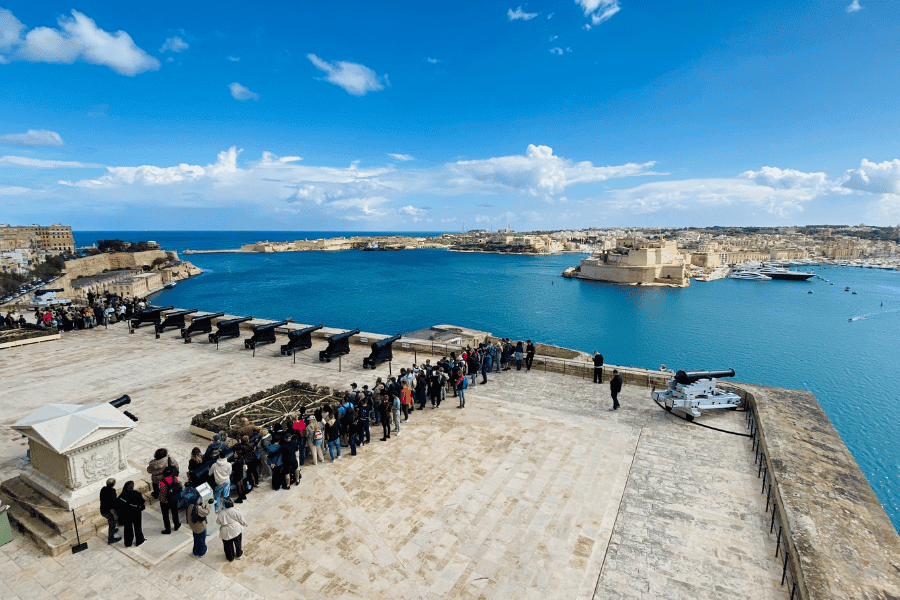
Valletta’s massive fortifications protected the island during the Great Siege of 1565. The views over the Grand Harbour are spectacular.
Visit St. John’s Co-Cathedral
A richly decorated masterpiece built by the Knights of St. John. The ornate interior contrasts with the plain exterior.
Upper Barrakka Gardens
Plan to arrive before noon or 4 p.m. as those are the times when you can watch the cannons be fired.
Lower Barrakka Gardens
A peaceful garden terrace overlooking the harbor. It’s a great spot in the late afternoon.
Day 2: The Three Cities & Fort St. Angelo
Explore the Three Cities (Birgu, Senglea, Cospicua)
Quieter and more residential than Valletta, these historic towns offer an authentic feel and beautiful waterfront views.
Fort St. Angelo
A powerful stronghold central to Malta’s military history and the Great Siege.
Harbor Boat Ride
A short boat ride across the Grand Harbour gives you a different perspective of the city walls.
Day 3: Blue Grotto & Megalithic Temples
Blue Grotto Boat Trip
Take a morning boat trip into sea caves where sunlight creates glowing blue reflections in the water.
Ħaġar Qim
One of Malta’s most important megalithic temples, dating back over 5,000 years.
Tarxien Temples
An impressive prehistoric temple complex with detailed stone carvings.
These ancient sites are older than the Egyptian pyramids, a must for any history buff.
Day 4: Day trip to Gozo: A Scenic Escape
Catch the ferry for a full day on Gozo, Malta’s greener small island.
Victoria Citadel
A fortified hilltop city with panoramic views across Gozo.
Salt Pans
Ancient geometric salt pans carved into the coast.
Ramla Bay
A sandy beach with reddish-golden sand and clear blue water.
Gozo feels slower and more rural — a wonderful contrast to the main island.
Day 5: Comino Island & The Blue Lagoon
Blue Lagoon
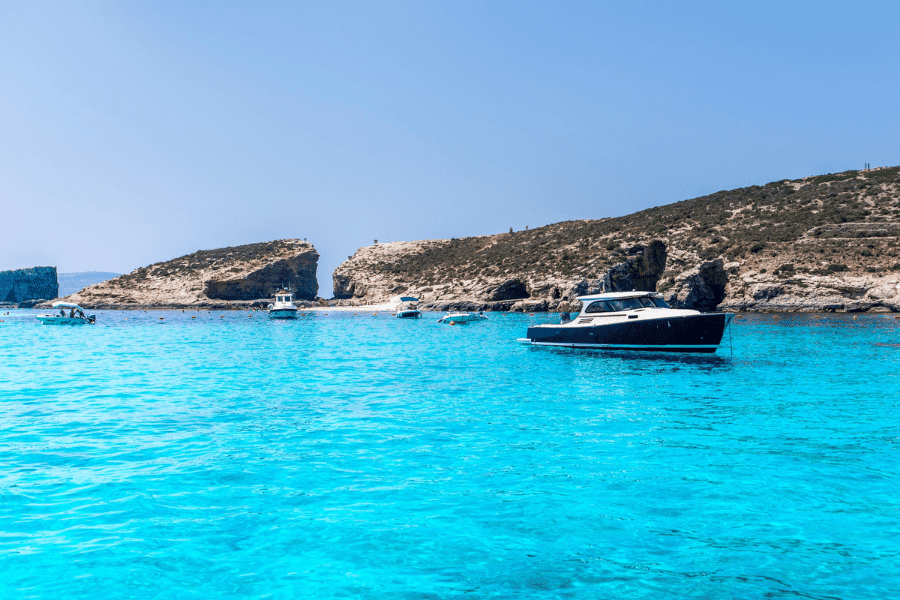
Famous for turquoise water and swimming spots. Arrive early morning to avoid crowds.
Crystal Lagoon
Less crowded and equally stunning, perfect for swimming or snorkeling.
Boat Ride Around Comino Island
A guided tour or private boat trip lets you explore hidden caves and coves.
Comino is a tiny island but one of the most beautiful places in Malta.
** Or you could combine Gozo and Comino Islands on a private tour. Then, you could use Day 5 to go to Marsaxlokk, an adorable fishing village.
Day 6: Mdina, Rabat, Dingli Cliffs, Popeye Village & St. Peter’s Pool
Mdina
Known as the Silent City, this medieval walled city is full of narrow streets and stunning views from its bastions.
Rabat
Explore this little town just outside of Mdina – it’s lovely!
Dingli Cliffs
Take bus 201 or a Bolt to Dingli Cliffs from Rabat. The views are incredible!
Popeye Village
Originally built as a filming location, it’s now a quirky theme park and colorful waterfront attraction.
St. Peter’s Pool
A natural swimming spot with flat rocks and crystal-clear water — perfect for adventurous swimmers.
Day 7: Coastal Relaxation & Beaches
Golden Bay & Mellieħa Bay
Some of Malta’s best sandy beaches with easy access and facilities.
Spinola Bay
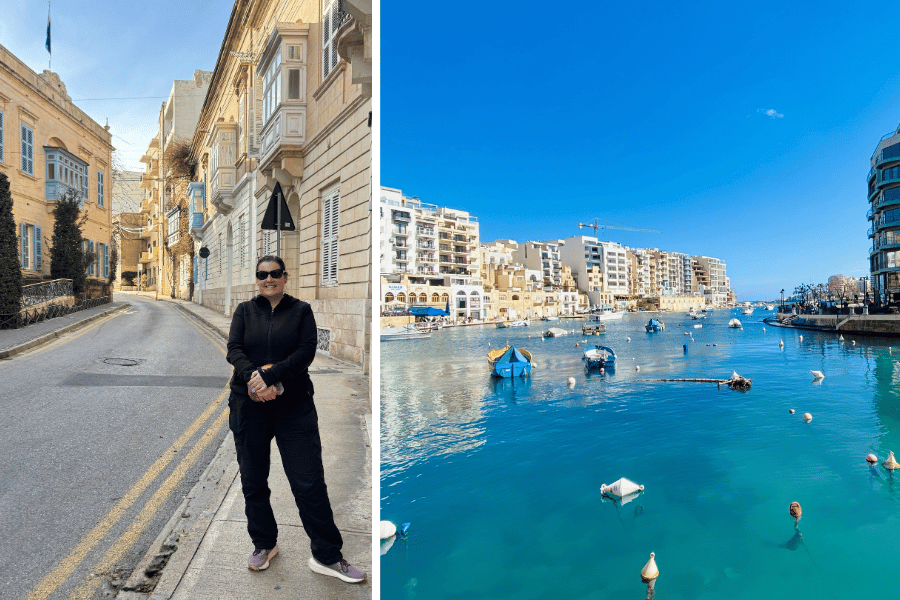
A scenic harbor ideal for a relaxed walk and happy hour by the water.
St Paul’s Bay
A relaxed area with seaside promenades and sunset views.
Where to Stay in Malta
Valletta – Best for History & Atmosphere
Valletta is a UNESCO World Heritage Site filled with narrow streets, baroque architecture, and harbor views. Everything is within walking distance, making it perfect for a first-time visit.
St. Paul’s Bay – Best for Beaches
St. Paul’s Bay is a great place for sandy beaches, relaxed evenings, and easy access to northern coastal attractions.
Sliema & Spinola Bay – Best for Dining & Nightlife
Spinola Bay offers waterfront restaurants, lively happy hour spots, and easy ferry access to Valletta. We stayed in Gzira, which is right next to Sliema and found it to be the perfect location for us, within a short walking distance to most restaurants we wanted to eat at.
Specific Places to Stay in Malta
Gżira – Central Base with Easy Access to Vegan Dining
Azur Hotel by ST Hotels
Budget-friendly stay in vibrant Gżira, within walking distance of the promenade and cafes. Gżira has become a hot spot for vegan eateries, including casual restaurants with hearty bowls, creative mains, and plant-based comfort food — perfect for lunch or dinner after exploring the waterfront and nearby Sliema.
115 The Strand Hotel by NEU Collective
An affordable option right on the Gżira seafront. Rooms offer easy walkable access to vegan cafes and smoothie bars. With Sliema just across the way, you’re also close to health-focused cafes and juice bars.
This is where we stayed and loved that each room has a kitchen which made the week stay much easier. We were also within a short walking distance to Balance Bowl and Ayu. The swimming pool and spa treatments made it extra special. We highly recommend staying here.
Sliema – Stylish Waterfront & Vegan Eats Nearby
Waterfront Hotel
A comfortable, mid-range hotel overlooking the Sliema promenade. Rooms have views over the bay, and you’re steps from vegan-friendly cafés, juice bars, and health-food spots.
Nearby vegan-friendly food includes smoothie bars, plant-based bowls, salads, and casual restaurants that clearly label vegan options. Most traditional restaurants can accommodate vegan requests if asked politely.
St. Julian’s – Lively Area with Lots of Dining Options
Radisson Blu Resort, St. Julians
A popular large hotel with a restaurant offering vegan options and a breakfast buffet that includes dairy-free choices. This is convenient if you want a mix of resort amenities and plant-based meals without leaving the property.
Hyatt Regency Malta & The Westin Dragonara Resort
Both upscale hotels on the St. Julian’s waterfront. While not fully vegan, restaurants inside often feature vegan dishes, and staff can help cater to plant-based diets. Many vegan-friendly cafés and restaurants are a short walk away.
Budget pick: Hotel Valentina – A smaller, budget-friendly hotel in St. Julian’s, close to casual vegan options, health cafes, and nightlife.
Valletta – Best for History & Vegan Spots Within Walking Distance
La Falconeria Hotel
Stylish boutique hotel in Valletta’s historic center. Walking distance to vegan-friendly cafés, market stalls with plant-based options, and restaurants that can adapt Mediterranean dishes for vegans.
The Phoenicia Malta
Luxury option with beautiful gardens and high-quality dining. While not exclusively vegan, restaurants and breakfast service include plant-based options. An easy base to explore Valletta’s growing vegan dining scene.
Grand Hotel Excelsior Malta
Excellent choice near Valletta’s waterfront and city walls. A short walk to cafes, markets, and places that offer vegan meals or can customize dishes.
Other Best Places & Experiences in Malta
-
Ħal Saflieni Hypogeum – A unique underground prehistoric burial site (book early).
-
St. Paul’s Bay boat trip – A great way to explore northern coves.
-
Guided tour of historical sites – Offers deeper insight into Malta’s rich past.
-
Explore filming locations – Malta has appeared in major productions thanks to its dramatic scenery.
-
Visit small towns inland – For a quieter, more local experience.
Practical Tips for Your Malta Trip
-
The official languages are English and the Maltese language.
-
Purchase a local SIM card for easy navigation if you are traveling from outside the EU.
-
Google Maps works well for both driving and public transportation.
-
Expect extra cost sfor some boat trips and guided tours.
-
Many areas are within a short walk from one another due to Malta’s small size.
Is One Week Enough?
A one week itinerary allows you to explore the island of Malta, Gozo, and Comino without rushing. Thanks to the short distances, you won’t spend much time in transit.
For first-time visitors, this Malta itinerary covers the best things, most beautiful places, historical sites, and gorgeous beaches — giving you a well-rounded experience of this remarkable Mediterranean destination.
FAQ About Malta: Everything You Need to Know
Here’s a handy guide for first-time visitors (or returning travelers) to Malta, covering practical tips, travel advice, and top attractions.
1. What is the best time to visit Malta?
The best time is April–June or September–October. During these months, the weather is warm, the sea is swimmable, and tourist crowds are smaller. July and August are hot and busy, ideal only if you want gorgeous beaches and nightlife.
2. How do I get to Malta?
Malta has many direct flights from Europe, and you’ll land on the main island at Malta International Airport, close to Valletta.
3. What are the official languages?
English and Maltese are the official languages. English is widely spoken everywhere, including restaurants, public buses, and historical sites.
4. How do I get around Malta?
-
Public buses: Affordable and cover most of the island, including the main towns and bus stops near beaches.
-
Rental car: The best way to explore hidden coves, megalithic temples, and the entire island at your own pace. Drive on the left side of the road.
-
Ferries: Connect Valletta to the Three Cities, Sliema, and Gozo (from the ferry terminal at Ċirkewwa).
5. Do I need a SIM card?
Yes, buying a local SIM card beforehand or in Valletta is convenient for navigation (Google Maps) and staying connected.
6. What are the top historical sites?
-
Valletta: City walls, Upper Barrakka Gardens, St. John’s Co-Cathedral
-
The Three Cities: Fort St. Angelo and waterfront towns like Birgu
-
Megalithic temples: Ħaġar Qim, Tarxien Temples, older than the Egyptian pyramids
-
Ħal Saflieni Hypogeum: Underground prehistoric burial site (booking required)
History buffs will find Malta a great place to explore thousands of years of civilization.
7. What are the best natural attractions?
-
Blue Grotto: Stunning sea caves accessible by boat trip
-
Blue Lagoon (Comino Island): Crystal lagoon with turquoise water
-
St. Peter’s Pool: Natural swimming spot
-
Sandy beaches: Golden Bay, Mellieħa Bay, Ramla Bay in Gozo
8. Are there theme parks or unique attractions?
-
Popeye Village: Filming location turned theme park with colorful sets
-
Salt pans in Gozo: Historic coastal feature great for photos
-
Scenic harbors: Spinola Bay, St. Paul’s Bay, for relaxed strolling
9. How long should I spend in Malta?
A full week itinerary is ideal to explore the main island, Gozo, and Comino. A shorter trip can still cover Valletta, the Three Cities, Blue Grotto, and some beaches.
10. What are the best places to stay?
-
Valletta: For historic sites, walking distance attractions, and city vibes
-
St. Paul’s Bay: For beaches and relaxed evenings
-
Sliema & Spinola Bay: For restaurants, nightlife, and easy ferry access to Valletta
11. Is Malta kid-friendly?
Yes! Attractions like Popeye Village, boat rides, sandy beaches, and small towns like Mdina offer family-friendly activities.
12. What should I pack?
-
Light clothing and sun protection for beaches
-
Walking shoes for historic sites and narrow streets
-
Swimwear for the Blue Lagoon, beaches, and St. Peter’s Pool
-
A light jacket for late afternoons or windy coastal spots
13. How can I avoid crowds?
-
Take guided tours to historical sites outside peak hours
14. Do I need a guided tour?
Not necessary, but guided tours can enhance your visit to historical sites, temples, and lesser-known hidden spots. Some come with a small fee, but the insight is worth it.
15. What makes Malta unique?
Malta is a tiny island with an entire week’s worth of history, beaches, and natural beauty. From UNESCO World Heritage Sites to crystal lagoons, narrow streets, and gorgeous beaches, the island offers a little bit of everything in a compact, easy-to-explore destination.
Where to Eat Vegan in Malta
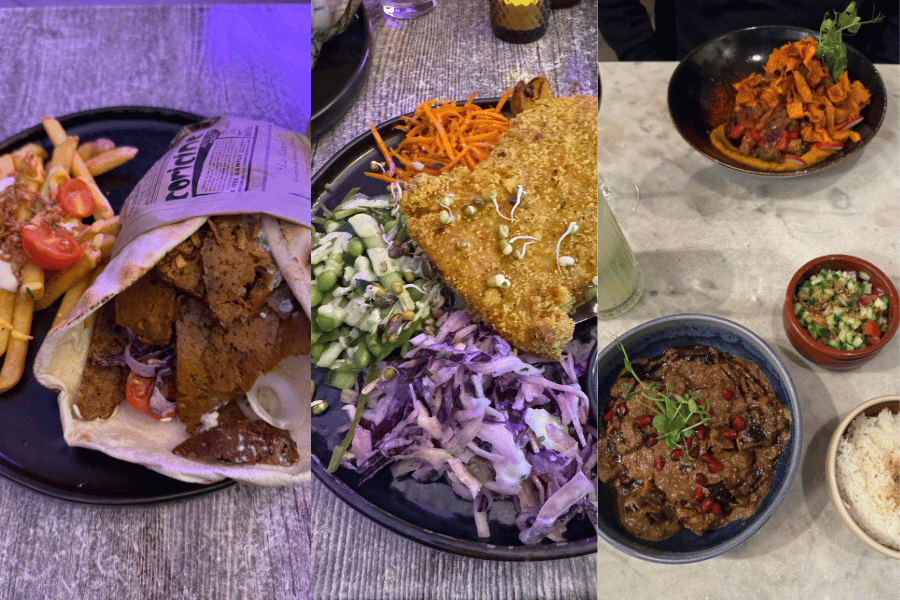
Balance Bowl – fully vegan restaurant in Gżira with creative plant-based bowls and mains. We ate here several times and enjoyed it, plus the people who work there are so kind and friendly.
La Vida – they had many delicious vegan options, Latin American tapas style
WOM – Word of Mouth – good brunch with vegan possibilities (check menu).
Evergreen Gelateria – this place was incredible. It’s 100% vegan and made with soy milk so the gelato is extra creamy.
AYU – flexible options, often plant-based/veg friendly. We devoured the ratatouille here. They have many vegan options including dessert.
Surfside – we absolutely loved the vegan pesto pasta dish here along with the views.

Other Notable Vegan-Friendly Spots (Worth Visiting)
BRUVV – creative café with some vegan/plant-based options in Balzan.
Ġugar Hangout & BAR – tasty wraps/salads in Valletta (many vegan-friendly choices). We had the most delicious vegan ftira here.
Focacceria Dal Pani – 1 vegan sandwich option (delicious!) & focaccia in Valletta. We ate here and then enjoyed vegan ice cream from Evergreen, just a 2 minute walk from each other.
10 Little-Known Things About Malta
-
Malta Has Its Own Prehistoric Underground Temple – The Ħal Saflieni Hypogeum is an underground labyrinth older than the Egyptian pyramids, rarely open to the public, so booking early is essential.
-
Maltese Language Is Unique – Maltese is the only Semitic language written in the Latin alphabet, influenced by Italian, English, and Arabic.
-
Malta Has Its Own Salt Pans – On Gozo and the main island, geometric salt pans have been used for centuries and are great for photography.
-
Popeye Village Is Real – Built as a film set for the 1980 movie Popeye, it’s now a quirky theme park and colorful attraction.
-
Hidden Blue Water Coves – Spots like St. Peter’s Pool and the less-visited bays of Gozo offer crystal-clear swimming away from the crowds.
-
Malta Once Fought a Great Siege – In 1565, the Knights of St. John defended the island against the Ottoman Empire — a pivotal moment in European history.
-
Tiny Island, Big History – Despite its small size, Malta has more than 7,000 years of recorded history, including temples, forts, and city walls.
-
Saltwater Lakes Are for Migrating Birds – Certain areas, like Marsalforn in Gozo, attract flamingos and other migratory species.
-
Film Locations Everywhere – Malta has served as a backdrop for Gladiator, Game of Thrones, and even Assassin’s Creed, among others.
-
Hidden Ancient Temples – Ħaġar Qim and Tarxien Temples are megalithic and often overlooked by tourists rushing to Valletta.

Final Thoughts on Malta
Malta is a tiny island with an outsized personality, where history, culture, and natural beauty converge in a way few destinations can match. From wandering the narrow streets of Valletta and Mdina to exploring the ancient megalithic temples older than the Egyptian pyramids, every corner tells a story. The turquoise waters of the Blue Lagoon and hidden coves like St. Peter’s Pool offer the perfect balance to a history-filled itinerary, making it ideal for travelers who want both gorgeous beaches and historic sites within easy reach. Even a first-time visitor will quickly appreciate that Malta’s compact size allows you to explore the entire island — from the Three Cities to Gozo and Comino — without spending too much time in transit.
Beyond the landmarks, Malta’s charm lies in its small-town feel and vibrant local life. Whether enjoying a quiet sunset at Spinola Bay, sampling plant-based cuisine at a vegan-friendly café in Gżira, or taking a short boat trip along the coast, the island encourages a slower, more immersive style of travel. Its friendly locals, cultural richness, and diverse experiences make Malta a great place to visit for an entire week, or even longer if you want to discover the hidden corners and lesser-known beaches that most tourists miss. In short, Malta offers a perfect mix of adventure, relaxation, and discovery — leaving every visitor with memories of a tiny island that feels much bigger in wonder.
This post contains affiliate links, which means I’ll receive a commission if you purchase through my link, at no extra cost to you.
We would be thrilled if you would use our Affiliate links attached here. If you buy something using our links, we receive a small commission. This helps us to continue creating amazing content on the blog for free. Thank you so much!
AFFILIATE LINKS – CLICK HERE
THE 5 ITEMS WE WERE SO HAPPY TO HAVE FOR ALL OF OUR TRIPS:
- Merrell women’s light hiking shoes – these are amazing because they are lightweight, but are extra grippy and helpful! I also have this pair that I always get compliments on: Merrell Rainbow shoes. Fernando loves his Asics trail runners which are also grippy and perfect for walking on cobblestone streets.
- Thermoflask water bottle – like a Hydroflask, but more affordable! We don’t go anywhere without these water bottles full of purified water.
- North Face Aphrodite 2.0 capris – Seriously, I wear these pants every.single.day! I couldn’t live without these ultra-comfy, lightweight pants that dry so quickly. They are 100% worth the money!
- Osprey Day Pack – this is an awesome lightweight backpack! We easily put the belongings we need at hand for traveling around the city and on public transportation.
- Travel-friendly chewable toothpaste tablets – these are so fantastic for keeping your teeth clean on the go!
- OUR FAVORITE EUROPEAN SERVICES:
- DISCOVER CARS – If you want to rent a car while you’re in Europe, our favorite car rental aggregator is Discover Cars. We frequently rent cars, and they always have the best prices and great quality vehicles.
- iTalki – if you want to learn another language before traveling to Europe or while you’re there, we love iTalki. We highly recommend their language services.
- NORD VPN – perfect to use your technology in other countries!
- Airalo E-Sim – this let’s you use your phone anywhere in the world without having to get a physical sim! We use this all the time when we travel outside Europe!
- For fun activities in each city, check out Viator and their recommendations.
- Big Bus Tours – the perfect way to see the city when you first arrive!
- Get Transfer – transfers between all of the airports and cities




Leave a Reply